
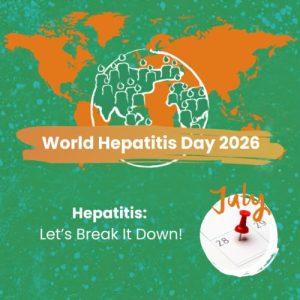
Every year on 28 July, the world comes together to mark World Hepatitis Day, a global campaign dedicated to raising awareness about viral hepatitis and encouraging action to prevent, detect and treat it. This year’s theme, “Hepatitis: Let’s Break It Down,” is a reminder that while science has given us effective vaccines, reliable testing and life-saving treatments, many people still face barriers that prevent them from accessing the care they need. Those barriers are not always medical. They can also be social, financial, cultural or rooted in misinformation. The campaign calls on governments, healthcare providers, organisations and communities to turn proven science into action by improving access to prevention, testing, treatment and care. At Hope Alliance Foundation (HAF), we believe that good health begins with access to accurate information. When people understand their health, they are better equipped to make informed decisions for themselves, their partners and their communities.
Why World Hepatitis Day 2026 still matters
One of the biggest challenges with hepatitis is that many people do not know they have it. Unlike illnesses that immediately make people feel sick, chronic hepatitis B and C often develop silently. Someone can live with the virus for years without noticeable symptoms while liver damage gradually progresses. According to the World Health Organization, 287 million people were living with chronic hepatitis B or C in 2024, and 1.3 million people died from hepatitis B and C-related liver disease and liver cancer that same year.2 Despite the availability of vaccines, testing and treatment, millions of people remain undiagnosed or unable to access the care they need. While hepatitis is a global health challenge, its impact is also deeply local. The same WHO data shows Ghana is among just ten countries that account for 69% of hepatitis B-related deaths worldwide.2 This makes hepatitis more than a distant global statistic. It is a public health issue that continues to affect families and communities across Ghana. Awareness alone is not enough. People need access to testing, treatment and accurate information without fear of judgement or discrimination.
What is hepatitis?
Hepatitis is inflammation of the liver. Your liver performs hundreds of vital functions every day. It helps your body process nutrients, filter harmful substances, fight infections and produce proteins that keep you healthy. When the liver becomes inflamed, these functions can be affected. There are several causes of hepatitis, but viral hepatitis, caused by hepatitis viruses A, B, C, D and E, remains one of the world’s biggest public health challenges. While some types cause short-term illness that people recover from completely, others can become chronic infections that quietly damage the liver over many years.

Understanding how hepatitis spreads
Not every type of hepatitis spreads in the same way. For people thinking about their sexual health, it is important to know that hepatitis B can be transmitted through sexual contact. Hepatitis C is less commonly spread through sex, but the risk increases in situations where there is exposure to infected blood. Some forms of viral hepatitis can also spread through contact with infected blood, sharing needles or using unsterilised tattoo or piercing equipment. Hepatitis A and E are primarily spread through contaminated food or water. Understanding these differences helps replace fear with facts. Facts are one of the most powerful tools we have against stigma.
Why this matters for HAF
Hepatitis B and C share many of the same transmission routes as HIV, including exposure to infected blood and, in the case of hepatitis B, unprotected sex. This means people living with HIV, along with many of the key populations HAF works with, may face a higher risk of hepatitis co-infection. When left undiagnosed, co-infection can complicate treatment and increase the risk of serious liver disease. This overlap is one of the reasons hepatitis is closely connected to HAF’s work in sexual and reproductive health and rights. Looking at hepatitis alongside HIV, rather than treating them as separate conversations, gives people a more complete picture of their health and supports earlier access to testing, treatment and care.
Prevention starts with informed choices
Protecting your health does not have to be complicated. Simple steps can make a significant difference:
- Get vaccinated against hepatitis A and B if recommended by your healthcare provider.
- Practice safer sex by using condoms and other barrier methods.
- Avoid sharing needles or equipment that may come into contact with blood.
- Choose licensed facilities for tattoos and piercings.
- Get tested if you believe you have been exposed or may be at increased risk.
Testing is especially important because hepatitis often has no obvious symptoms in its early stages. Knowing your status allows you to access care earlier, protect your health and reduce the risk of unknowingly passing the virus to others.
A diagnosis is not the end of the story
Receiving a hepatitis diagnosis can feel overwhelming, but it is not the end of the conversation. Today, hepatitis C can be cured, while hepatitis B can be effectively managed with treatment that significantly reduces the risk of liver disease and liver cancer. Early diagnosis remains one of the most important factors in improving long-term health outcomes. Just as importantly, people living with hepatitis deserve dignity, support and compassionate care, not stigma. Health outcomes improve when people feel safe enough to ask questions, seek testing and stay connected to healthcare services.
Breaking down barriers together
This year’s World Hepatitis Day theme challenges all of us to think beyond the virus itself. What prevents people from getting tested? Is it fear? A lack of information? Limited access to healthcare? Stigma surrounding sexual health? The answers will differ from one person to another, but every barrier removed brings us one step closer to healthier communities. For HAF, access to health information is also a human rights issue. Through education, advocacy and community engagement, we are committed to helping people make informed decisions about their health and wellbeing. Whether we are discussing sexual and reproductive health and rights, mental health or broader health equity, our goal remains the same. We want to create spaces where people can access trusted information, ask honest questions and receive support without shame. If you are due for a check-up, unsure of your status, or simply have questions about hepatitis, Hope Alliance Foundation is here to help you access trusted information, guidance and appropriate support. Seeking advice early and knowing your status are among the most important steps you can take for your health and the people you care about. Because breaking down barriers starts with breaking down silence.
References
- World Health Organization. Efforts to eliminate hepatitis delivers gains but more action needed to meet 2030 targets.
- World Health Organization. Global Hepatitis Report 2026.
- World Health Organization. Hepatitis B Fact Sheet.
- World Health Organization. World Hepatitis Day 2026: Hepatitis, Let’s Break It Down (campaign page, general reference).