
Bridging Gaps Newsletter January – June 2026
|


What Funding Cuts Mean for LGBTQIA+ Communities in Ghana
Behind every funding cut is a Thursday that looks different than it did last month.
Sometimes, it means a mental health session does not happen. An outreach visit is cancelled. Someone misses the chance to get trusted information about HIV prevention or is unable to access a service they were counting on. These moments may seem small on paper, but for someone looking for support, they can make all the difference.
The wider picture tells a similar story. According to a UNAIDS press release published in June 2026, across 62 countries, 38% fewer people received PrEP, a medicine used to prevent HIV, at least once in 2025 than in 2024. That is a drop from 3.3 million people to 2.1 million in just one year. The decline comes as global aid cuts put growing pressure on HIV prevention services, showing how quickly access can be disrupted when funding falls away.
This is not only a global pattern to us. It is something we have lived directly. In 2024, HAF launched two HIV research projects with the Behavioral, Sexual, and Global Health Lab and the University of Ghana, funded by the U.S. National Institutes of Health through its Fogarty International Center: LAFIYA HIV Self-Testing, launched in April 2024 and intended to run through January 2026, and LAFIYA HIV Status Neutral, a multilevel intervention launched in July 2024 and expected to continue through July 2027, aimed at increasing HIV testing, PrEP, and ART uptake. Both projects supported young gay, bisexual, and other men who have sex with men in Ghana’s slum communities. The HIVST study adapted the Many Men, Many Voices intervention model, an approach with an established track record elsewhere, building HIV self-testing, education, and emotional resilience into one programme to address the intersecting stigma young gay and bisexual men face around sexuality, HIV status, and socioeconomic background.

The scale of that reach is worth stating plainly. For the HIVST study alone, 304 people applied to take part. Of those, 199 did not meet the study’s inclusion criteria, and of the remaining 105 eligible respondents, 60 confirmed their availability and took part, drawn from 24 different communities across Accra, including Chorkor, Labadi, Kasoa, Dome, Jamestown, Dansoman, and Nungua, among others. Alongside this, the study also conducted 40 in-depth interviews: 20 with young gay and bisexual men directly, and 20 with service providers, nurses and staff from community-based organisations who support this population.
The freeze halted not only the intervention itself, but also the essential post-intervention evaluations needed to measure outcomes and inform future policy and programming.
The HIVST study had already completed those interviews and rolled out its intervention with the 60 confirmed participants between February and early March 2025, just as the work began showing promising results, when a sudden freeze in U.S. foreign aid cut the funding off, not because the work had failed, but because the money simply disappeared.
Without that funding, we cannot sustain HIV testing kits, education sessions, linkage to care, or psychosocial support for people living with HIV, jeopardising our contribution to the UNAIDS 95-95-95 targets: ensuring that 95% of people living with HIV know their status, 95% of those diagnosed receive sustained treatment, and 95% of those on treatment achieve viral suppression. The toll has also reached our own team, many of whom come from the very communities we serve. Their sense of purpose and stability has been shaken, and relationships built over years of service now risk unravelling under the weight of insecurity and burnout.

At Hope Alliance Foundation, we see why continued access matters. Whether it is supporting someone to access SRHR services, providing psychosocial support or connecting people with trusted care, the goal has always been the same: making sure LGBTQIA+ communities can access the support they need with dignity and without fear. That has not changed, even when the funding landscape has.

Like many organisations in this space, we have had to navigate a difficult and shifting environment. Since our founding in 2012, we have seen what consistent presence means to the people we serve. We have adapted, strengthened partnerships and continued looking for practical ways to support our communities because the need does not disappear when funding becomes uncertain.
Real impact is not only measured by the number of programmes delivered. Sometimes it is the conversation that helps someone ask for support. It is the referral that connects a person to care. It is the reassurance of knowing there is a place to turn when they need it. Or it is the confidence someone gains after finding a space where they are welcomed and respected.
This is not merely pausing a set of programmes. It is pausing lives, progress, and the fight for equity in healthcare.
Projects like LAFIYA do more than deliver HIV services. They create safe spaces, affirm identity, and offer hope. Reinstating and protecting funding for work like this is not just a matter of charity, it is a matter of justice and global solidarity.
That is why continued support matters. Each partnership, contribution and person who chooses to stand with us helps keep essential services within reach, today and for those who will need them tomorrow.
As we seek alternative funding sources and support, our message to donors, policymakers, and partners is clear: this work must not be abandoned. If you would like to help us continue reaching LGBTQIA+ communities, explore a partnership with us, or simply find out more, we would love to hear from you. Email info@hopealliancefoundation.org or call +233 (0) 531 288 854.
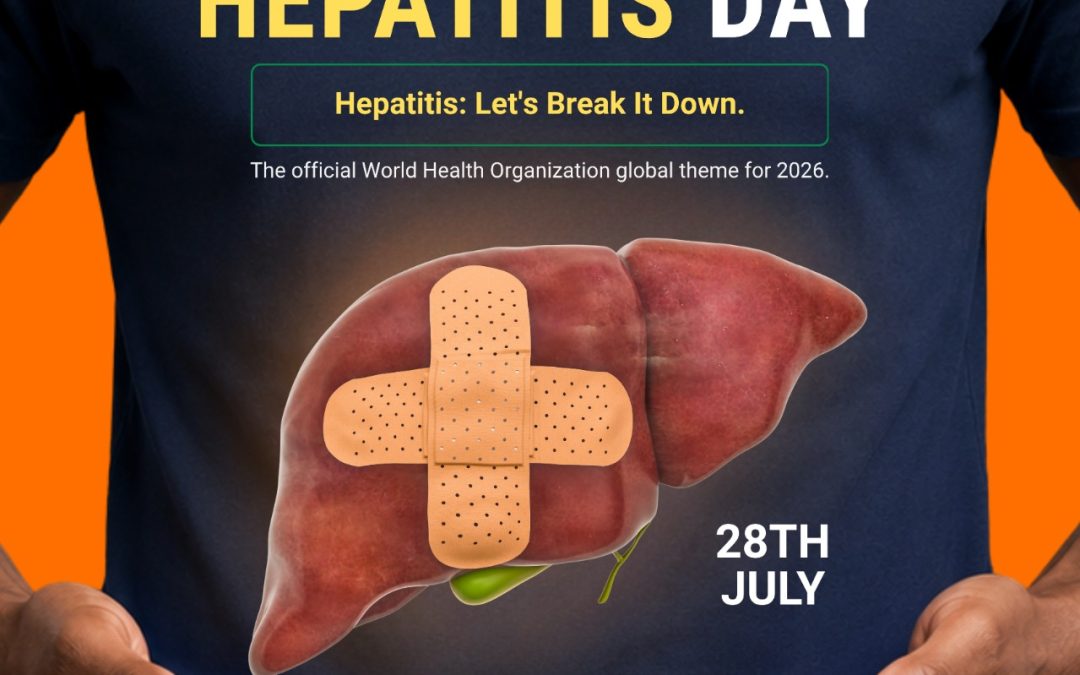
World Hepatitis Day 2026: Breaking Down the Barriers to Better Liver Health
Every year on 28 July, the world comes together to mark World Hepatitis Day, a global campaign dedicated to raising awareness about viral hepatitis and encouraging action to prevent, detect and treat it. This year’s theme, “Hepatitis: Let’s Break It Down,” is a reminder that while science has given us effective vaccines, reliable testing and life-saving treatments, many people still face barriers that prevent them from accessing the care they need. Those barriers are not always medical. They can also be social, financial, cultural or rooted in misinformation. The campaign calls on governments, healthcare providers, organisations and communities to turn proven science into action by improving access to prevention, testing, treatment and care. At Hope Alliance Foundation (HAF), we believe that good health begins with access to accurate information. When people understand their health, they are better equipped to make informed decisions for themselves, their partners and their communities.
Why World Hepatitis Day 2026 still matters
One of the biggest challenges with hepatitis is that many people do not know they have it. Unlike illnesses that immediately make people feel sick, chronic hepatitis B and C often develop silently. Someone can live with the virus for years without noticeable symptoms while liver damage gradually progresses. According to the World Health Organization, 287 million people were living with chronic hepatitis B or C in 2024, and 1.3 million people died from hepatitis B and C-related liver disease and liver cancer that same year.2 Despite the availability of vaccines, testing and treatment, millions of people remain undiagnosed or unable to access the care they need. While hepatitis is a global health challenge, its impact is also deeply local. The same WHO data shows Ghana is among just ten countries that account for 69% of hepatitis B-related deaths worldwide.2 This makes hepatitis more than a distant global statistic. It is a public health issue that continues to affect families and communities across Ghana. Awareness alone is not enough. People need access to testing, treatment and accurate information without fear of judgement or discrimination.
What is hepatitis?
Hepatitis is inflammation of the liver. Your liver performs hundreds of vital functions every day. It helps your body process nutrients, filter harmful substances, fight infections and produce proteins that keep you healthy. When the liver becomes inflamed, these functions can be affected. There are several causes of hepatitis, but viral hepatitis, caused by hepatitis viruses A, B, C, D and E, remains one of the world’s biggest public health challenges. While some types cause short-term illness that people recover from completely, others can become chronic infections that quietly damage the liver over many years.

Understanding how hepatitis spreads
Not every type of hepatitis spreads in the same way. For people thinking about their sexual health, it is important to know that hepatitis B can be transmitted through sexual contact. Hepatitis C is less commonly spread through sex, but the risk increases in situations where there is exposure to infected blood. Some forms of viral hepatitis can also spread through contact with infected blood, sharing needles or using unsterilised tattoo or piercing equipment. Hepatitis A and E are primarily spread through contaminated food or water. Understanding these differences helps replace fear with facts. Facts are one of the most powerful tools we have against stigma.
Why this matters for HAF
Hepatitis B and C share many of the same transmission routes as HIV, including exposure to infected blood and, in the case of hepatitis B, unprotected sex. This means people living with HIV, along with many of the key populations HAF works with, may face a higher risk of hepatitis co-infection. When left undiagnosed, co-infection can complicate treatment and increase the risk of serious liver disease. This overlap is one of the reasons hepatitis is closely connected to HAF’s work in sexual and reproductive health and rights. Looking at hepatitis alongside HIV, rather than treating them as separate conversations, gives people a more complete picture of their health and supports earlier access to testing, treatment and care.
Prevention starts with informed choices
Protecting your health does not have to be complicated. Simple steps can make a significant difference:
- Get vaccinated against hepatitis A and B if recommended by your healthcare provider.
- Practice safer sex by using condoms and other barrier methods.
- Avoid sharing needles or equipment that may come into contact with blood.
- Choose licensed facilities for tattoos and piercings.
- Get tested if you believe you have been exposed or may be at increased risk.
Testing is especially important because hepatitis often has no obvious symptoms in its early stages. Knowing your status allows you to access care earlier, protect your health and reduce the risk of unknowingly passing the virus to others.
A diagnosis is not the end of the story
Receiving a hepatitis diagnosis can feel overwhelming, but it is not the end of the conversation. Today, hepatitis C can be cured, while hepatitis B can be effectively managed with treatment that significantly reduces the risk of liver disease and liver cancer. Early diagnosis remains one of the most important factors in improving long-term health outcomes. Just as importantly, people living with hepatitis deserve dignity, support and compassionate care, not stigma. Health outcomes improve when people feel safe enough to ask questions, seek testing and stay connected to healthcare services.
Breaking down barriers together
This year’s World Hepatitis Day theme challenges all of us to think beyond the virus itself. What prevents people from getting tested? Is it fear? A lack of information? Limited access to healthcare? Stigma surrounding sexual health? The answers will differ from one person to another, but every barrier removed brings us one step closer to healthier communities. For HAF, access to health information is also a human rights issue. Through education, advocacy and community engagement, we are committed to helping people make informed decisions about their health and wellbeing. Whether we are discussing sexual and reproductive health and rights, mental health or broader health equity, our goal remains the same. We want to create spaces where people can access trusted information, ask honest questions and receive support without shame. If you are due for a check-up, unsure of your status, or simply have questions about hepatitis, Hope Alliance Foundation is here to help you access trusted information, guidance and appropriate support. Seeking advice early and knowing your status are among the most important steps you can take for your health and the people you care about. Because breaking down barriers starts with breaking down silence.
References
- World Health Organization. Efforts to eliminate hepatitis delivers gains but more action needed to meet 2030 targets.
- World Health Organization. Global Hepatitis Report 2026.
- World Health Organization. Hepatitis B Fact Sheet.
- World Health Organization. World Hepatitis Day 2026: Hepatitis, Let’s Break It Down (campaign page, general reference).

ECONOMIC NEEDS ASSESSMENT AMONGST LGBTQI+ PERSONS IN GHANA FOR GREATER IMPACT
Majority of identified LGBTQI+ persons in Ghana face violence and discrimination because of their sexual orientation or gender identity. Advocacy for the well-being and human rights protection of LGBTQI+ persons over the years has been engendered based on individual stories gathered from the LGBTQI+ community.
Click Link To Download :
Research Report- Economic Needs Assessment Amongst LGBTIQ+ Peersons in Ghana for Greater Impact